
Buying a Used Boat? How to Evaluate Its Maintenance History

Buying a Used Boat? How to Evaluate Its Maintenance History
A survey tells you what condition a boat is in today. Maintenance history tells you how it got there, and gives you a much better idea of what’s coming next.
That distinction matters more than most buyers realize. Two boats can survey similarly and have very different futures ahead of them, depending on whether previous owners stayed ahead of problems or waited for things to break.
Here’s how to evaluate a used boat’s maintenance history, what to ask for, and what the answers actually tell you.
Why Maintenance History Matters as Much as the Survey
Getting a survey done on a used boat should absolutely be done. A surveyor spends a few hours with the boat, checks what’s accessible, and reports on what they can see and test. Most insurers require a survey and a good surveyor can identify issues and help you avoid a boat that will be nothing but problems. Or leave you feeling confident that you’ve found a boat that will serve you for many years to come.
But a survey is a snapshot. It can’t tell you whether the impeller was changed last month or four years ago. It can’t tell you if the previous owner noticed a small problem two seasons back and decided to deal with it later. It can’t tell you whether the engine has been serviced on schedule or whenever it seemed convenient.
Maintenance history fills in those gaps. More importantly, it reveals the previous owner’s approach to their boat. An owner who tracked their maintenance carefully probably caught small problems early. An owner who can’t tell you when anything was last done probably didn’t.
That mindset is one of the best predictors of what you’ll find after you take ownership.
What to Ask the Seller For
Come to the conversation with a specific list. Vague requests get vague answers.
Ask for:
- Service records or a maintenance log, however it’s kept
- Engine and generator hour readings, plus any history of those hours over time
- Haul-out history: when, where, and what was done
- Bottom paint dates and product used
- Replacement dates for major components: standing rigging, sails, batteries, canvas, electronics, refrigeration
- Any prior survey reports
- Original owner’s manuals and documentation
- Warranty information on recent work or equipment
- Records from previous owners, if the seller received any
Green Flags: What Good Records Look Like
Consistent, dated entries over time. This is the single most important signal. A log showing regular entries across seasons tells you someone was paying attention. It doesn’t need to be fancy. A spreadsheet, a notebook, or a maintenance app all work.
Evidence of preventive work, not just repairs. Records showing scheduled oil changes, impeller replacements, and zinc inspections indicate an owner who stayed ahead of problems. Records showing only repairs indicate an owner who reacted to failures.
Specific answers to specific questions. Ask when the raw water impeller was last changed. An owner with good habits will either know or be able to look it up. Hedging and approximation are telling.
Records that survived ownership changes. If the current owner has documentation from a previous owner, that’s a strong signal about how the boat has been treated over its whole life.
Age-based items tracked by date. Some maintenance is driven by the calendar rather than use, and an owner who tracks those dates understands the difference. (If you’re new to this distinction, our post on time-based vs. hours-based maintenance covers why some equipment needs both.)
A note on receipts: Many well-meaning people will tell you to ask for receipts. And they are a genuine green flag when they exist and the strongest confirmation you can get of claimed work.
But be realistic. While it is worth asking if the owner has them, you should recognize that paper piles up fast on a boat and plenty of conscientious owners simply don’t hold onto every receipt from a decade of ownership. The absence of receipts isn’t automatically a problem. What matters much more is whether there’s a consistent record of what was done and when.
Red Flags: What Should Make You Pause
Gaps in the timeline. Especially recent ones. A boat with solid records for many years and nothing in more recent times suggests recent neglect worth asking about.
Only repair records. If everything documented is a fix rather than a scheduled service, you’re looking at a boat that’s been maintained reactively.
Hour readings that don’t match the wear. An engine claiming low hours on a boat showing heavy use deserves a closer look, including at the hour meter itself.
Reluctance to provide documentation. Most sellers are happy to share what they have. Resistance is worth noting.
Age-based items with no replacement date. Standing rigging, hoses, and safety equipment all have service lives regardless of appearance. “It looks fine” is not a replacement date.
No knowledge of haul-out specifics. If the seller can’t tell you where the boat was last hauled or what was done, that’s a gap in both maintenance and documentation. It’s also worth asking whether they have the manufacturer’s lifting and blocking diagrams, which matter more than most owners realize. We wrote about why lifting and blocking specifications are critical after learning that lesson expensively in Thailand.
Age-Based Items to Verify Specifically
Some components need attention based on age, not condition or hours. These are worth asking about individually, because they’re expensive, they’re safety-related, and they’re easy for a seller to overlook.
- Standing rigging. Many insurers and manufacturers suggest replacement in the 10 to 15 year range depending on use and climate. This is a significant expense to inherit unknowingly.
- Hoses and hose clamps. Especially below the waterline. Rubber degrades with time even when it looks fine.
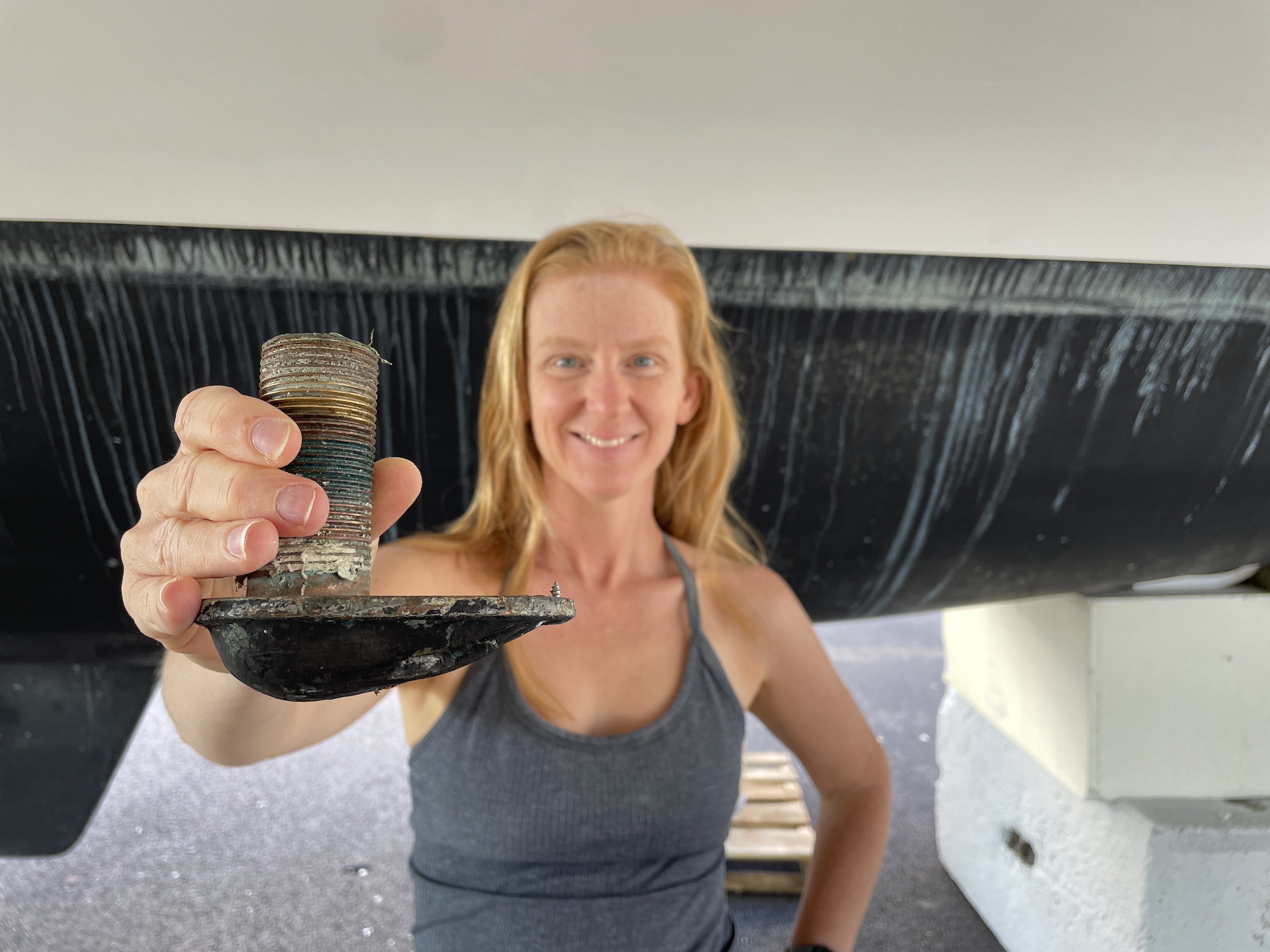
- Through-hulls and seacocks. Ask when they were last serviced and whether they operate smoothly. Stiffness is often the first sign of a problem.
- Fuel hoses and tanks. Age and fuel type both matter here.
- Life raft, EPIRB, flares, and PFDs. All have expiration or service dates.
- Batteries. Ask for install dates, not just “they’re good.”
- Belts, impellers, and filters. These should have recent dates if the boat has been maintained.
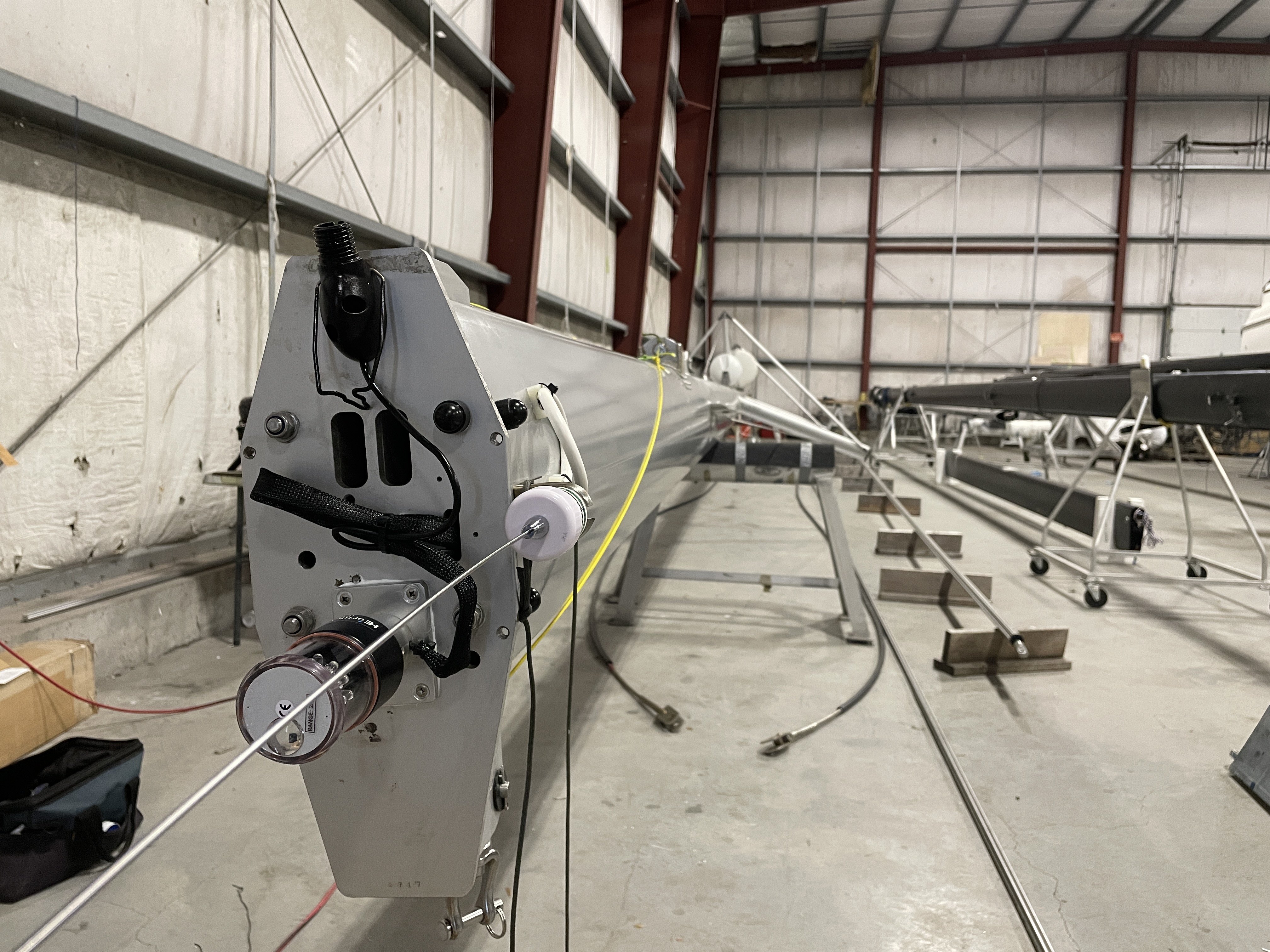
Several of these overlap with maintenance tasks that get overlooked even by current owners. Our post on six commonly overlooked maintenance tasks covers what to look for and why they matter.
Turning Records into a Budget
Here’s where maintenance history becomes practical. Once you understand what’s been done and when, you can forecast what’s coming due.
If the last bottom job was three years ago, budget for one soon. If the standing rigging is fourteen years old, plan for replacement. If there’s no record of the fuel filters being changed, assume they need it.
The purchase price is only part of what you’ll spend in year one. A boat with strong records lets you plan that first year accurately. A boat with unclear history means budgeting for uncertainty, which usually means budgeting more.
This is also useful negotiating information. Deferred maintenance you’ll inherit is a legitimate part of the conversation about price.
What to Do After You Buy
Whatever records you receive, the clock starts fresh with you.
Build your equipment inventory. Walk the boat and document every piece of equipment: make, model, serial number, and current hours where applicable.
Enter what you learned. Any maintenance dates you got from the seller are worth recording. Even approximate dates give you a starting point that’s better than nothing.
Establish your baseline. For anything with unknown history, consider starting fresh. If you don’t know when the impeller was changed, change it and start the clock.
Keep it going from here. The next time this boat changes hands, whether that’s in three years or twenty, the buyer will ask the same questions you just asked. Good records make that conversation easy.
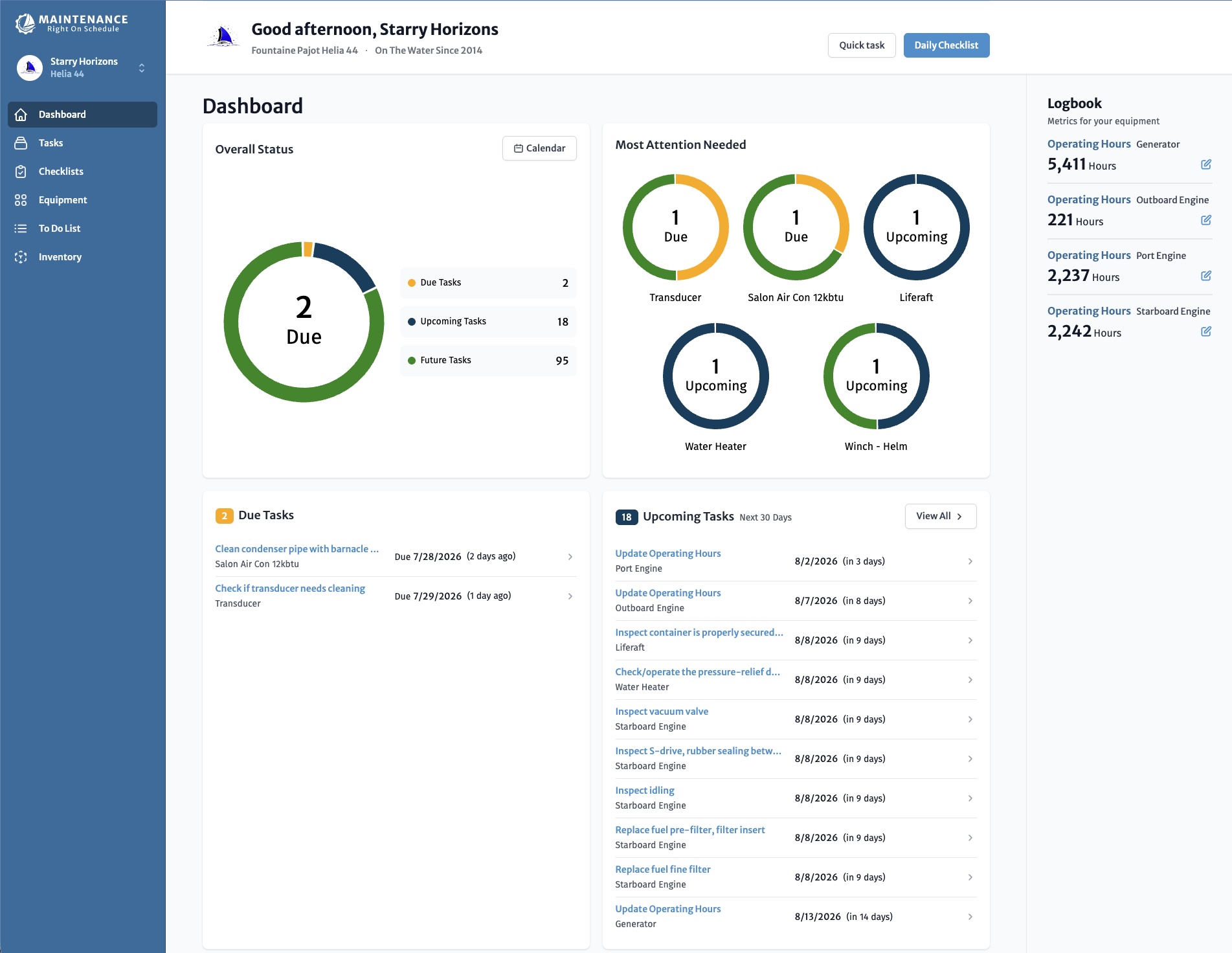
This is exactly what MaintenanceROS was built for. Our database includes hundreds of boat models and thousands of manufacturer-recommended maintenance schedules, so you can build your maintenance plan without starting from a blank page. And all of your documentation, from lifting diagrams to service records, lives in one place you can access from anywhere.
If You’re Selling: Records Are Value
Eventually, there will come a day (ours was a very sad one - not the happy day everyone jokes about!) where you’ll sell your boat. When we sold Starry Horizons, the maintenance conversation came up again and again. The buyers had a lot of questions, and because I’d kept meticulous records throughout our decade of ownership, I could answer every one of them with specifics rather than approximations. When was the last service on that piece of equipment? What had we replaced, and when? What did we know about the systems they’d be inheriting?
All of those records lived in MaintenanceROS by that point, which meant the answers were a few taps away instead of buried in a locker full of damp paperwork. And when the sale closed, we transferred the account to the new owners. Everything we’d built over ten years, the equipment inventory, the service history, the documentation, went with the boat. Account transfers do take a bit of manual work on our end, but it’s something we’re happy to arrange for owners selling their boats.
That gave them real confidence in what they were buying. It also meant they weren’t starting from a blank page, which is exactly the position most new owners find themselves in.
Buyers don’t want surprises. Every question you can answer with a date and a record is one less unknown they’re taking on. Every question you can’t answer becomes a reason to offer less or move on.
If you’re thinking about selling in the next few years, start documenting now. Even a year or two of consistent records is meaningfully better than none.
Frequently Asked Questions
Do used boats usually come with maintenance records? It varies widely. Some owners keep detailed logs, others keep nothing at all. Records are more common on newer boats, larger boats, and boats that have had professional service work done. Don’t assume records exist, but do ask specifically.
Is a survey enough on its own? A survey is essential, but it’s a point-in-time assessment of condition. Maintenance history adds context a survey can’t provide, including how consistently the boat has been cared for and what’s likely coming due. Use both.
How much should I budget for deferred maintenance on a used boat? It depends heavily on the boat’s age, size, and the quality of its records. The more unknowns you’re inheriting, the larger your first-year budget should be. Use the age-based items list above to identify likely near-term expenses and price them out for your specific boat.
What if the seller has no records at all? It’s not automatically a dealbreaker, particularly on an older or smaller boat. But it means you’re buying without information, so lean harder on your surveyor, ask more detailed questions in person, and budget conservatively. Consider resetting the clock on wear items you can’t verify.
Should I trust a maintenance log I can’t verify with receipts? A consistent, dated log kept over years is meaningful even without matching receipts. Look for internal consistency: do the entries match the boat’s apparent condition, the equipment installed, and the seller’s answers to your questions? Detailed records that line up with what you observe are generally credible.
The Bottom Line
Maintenance history is one of the most useful and most overlooked parts of evaluating a used boat. It tells you how the boat has been treated, what kind of owner you’re buying from, and what your first few years of ownership are likely to cost.
Ask for records early in the process. Read what you get carefully. And pay as much attention to the pattern as to the paperwork.
Buying a boat and starting fresh with your own records?
Start your free 30-day trial and build your maintenance plan from day one.